Aqua Facial27 April 2026
Aqua Facial, HydraFacial or HydroBoost: What's the Difference?
Aqua Facial, HydraFacial or HydroBoost – what's the difference and which treatment is right for dry skin, enlarged pores and glow? A comparison from Frankfurt.
 Maryam Saadatmand4 min read
Pigmentation issues are often discussed as a single topic during consultations — clinically, however, there are three quite different types, and each requires different treatments. Choosing a "stronger" treatment without knowing which pigmentation type you have can, in the worst case, make the skin worse. This guide helps you identify your type — and pick the right treatment.
In short:
- Three pigmentation types: Melasma (hormonal), Freckles/Lentigines (genetic or sun-induced), PIH (after inflammation)
- For melasma, no microneedling — it can spread pigmentation further
- During active acne, only Detox Purifying — no invasive treatments
- Sun protection is the single most important measure for all three types
- In the Skin Analysis consultation we identify your pigmentation type before any treatment
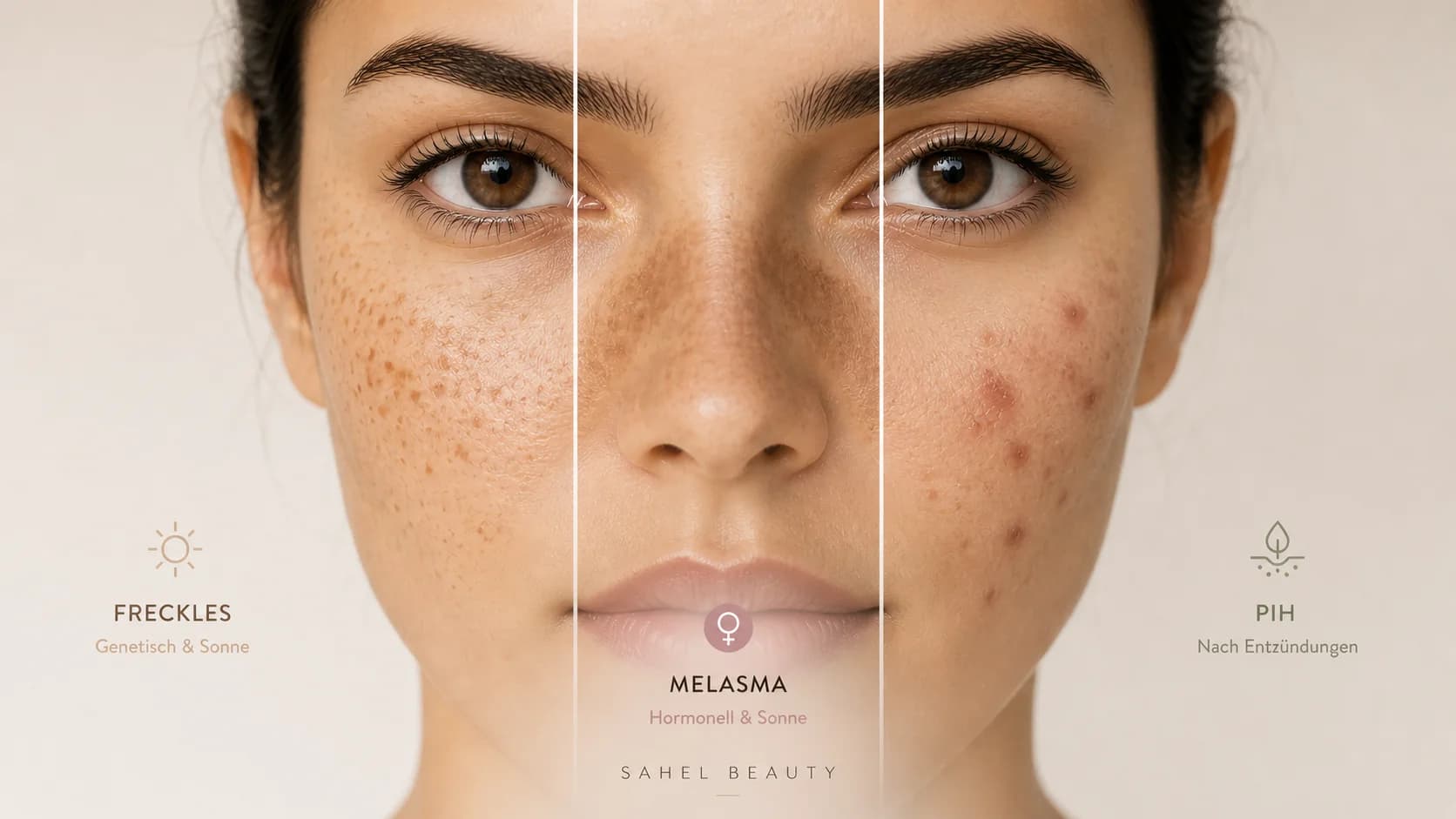
What does it look like? Melasma appears as symmetrical, patchy discoloration — typically on both cheeks, forehead, and upper lip at the same time. Edges are blurred, and the affected areas are larger than typical pigment spots. Colour: brownish or greyish-brown.
What causes it? Melasma is a hormonally triggered hyperactivity of melanocytes — the pigment-producing cells. Typical triggers are pregnancy (hence sometimes "pregnancy mask"), birth-control pills, hormone replacement therapy, or hormonal shifts. UV light, heat, and — often underestimated — blue light from screens worsen melasma.
What helps? Gentle superficial peels, niacinamide and mild azelaic acid care, high-quality physical sun protection. The single most important lever is consistent sun protection — without it, no treatment works lastingly. Brightening Care in its gentle, adapted form is appropriate here.
What doesn't help — or actively makes it worse? Microneedling is contraindicated for melasma. The controlled micro-injuries can, in hormonally over-active pigment cells, spread the discoloration further across the face. Intensive acid peels in the active phase and lasers without medical supervision are similarly problematic.
What do they look like? Small brown spots on the face, shoulders, and back of the hands. Freckles (ephelides) often appear from childhood, are sharply defined, and fade in winter and darken again in summer. Lentigines ("age spots") result from years of UV exposure, are slightly larger, more uniformly pigmented, and usually permanent.
What causes them? Freckles are genetic — people with light skin types are particularly prone. Lentigines develop from cumulative sun exposure over years.
What helps? Brightening serums with vitamin C or arbutin, gentle superficial peels, high-quality sun protection. For individual stubborn lentigines, a targeted Plasma Pen treatment is possible — point vaporization of the pigmented tissue. Microneedling (Bright Face) is also appropriate for this pigmentation type — unlike with melasma — because there is no hormonal component reinforcing the pigmentation.
Important note: Lentigines can in rare cases be confused with skin changes that should be assessed medically. Unusually fast-growing, asymmetrical, or colour-changing spots belong in dermatological care.
What does it look like? Dark, clearly localised spots in places where inflammation previously sat — typically on healed acne sites, wounds, after burns, or laser treatments. Colour and depth vary strongly with skin type.
What causes it? During the inflammatory phase, the skin activates melanin production for protection and repair. After healing, some pigment remains visible. In darker phototypes (4–6), PIH is more pronounced and can last months to years.
What helps? Mild peels, vitamin C, azelaic acid, tranexamic acid, light retinol care, good hydration. Important: manipulating the original inflammation (squeezing, scratching) significantly worsens PIH.
Important for acne patients: During active acne we only perform Detox Purifying. Microneedling, RF, and plasma therapy on inflamed skin can spread bacteria and reactivate inflammation. Only once the acne has subsided and only marks remain, are further treatments such as Brightening Care or targeted Plasma Pen on pigment spots appropriate.
| Question | Suggests… |
|---|---|
| Symmetrical on both cheeks? | Melasma |
| Appeared after pregnancy / the pill? | Melasma |
| Sharp, small spots? | Freckles or lentigines |
| Present since childhood? | Freckles |
| On healed acne sites? | PIH |
| Fades in winter? | Freckles (rarely melasma) |
| Pronounced in darker skin types? | PIH |
| Spreading across the face? | Melasma (hormonal component) |
This table doesn't replace a skin analysis but gives orientation. In the Skin Analysis consultation we identify the type and define a tailored treatment plan.
Three constants apply regardless of pigmentation type:
Pigmentation issues are cosmetically treatable, but some findings belong in medical practice:
In the consultation we assess whether medical clarification is appropriate before treating.
Pigmentation issues are treatable — but only with the right diagnosis at the start. In our Frankfurt studio, we begin every pigment treatment with a Skin Analysis, identify your pigmentation type and skin condition, and define a plan that fits your skin — not a standard program. Book your appointment and let us choose the right program together.
Ready for your glow?
Book HydroBoost right at the decision point — in Frankfurt.
HydroBoost · €139 · 60 min
Treated by Maryam — 15+ years of experience
Blog
Melasma appears as symmetrical, patchy discoloration — usually on both cheeks, forehead, and upper lip simultaneously, with blurred edges. Freckles and lentigines are smaller, sharply defined, and irregularly distributed. If the pigmentation appeared after pregnancy, the pill, or hormonal shifts, that strongly suggests melasma.
Melasma is a hormonally triggered hyperactivity of the pigment cells. Microneedling creates controlled micro-injuries — in melasma, these can act as a stimulus that spreads the pigmentation further across the face rather than reducing it. For melasma we use gentle superficial care, niacinamide, and consistent physical sun protection.
PIH (Post-Inflammatory Hyperpigmentation) refers to dark marks that remain after inflammation, acne, wounds, burns, or laser treatments. During the inflammatory phase, the skin produces extra melanin to repair, and that pigment remains visible after healing. In darker phototypes (4–6), PIH is more pronounced and longer-lasting.
During active, inflammatory acne we only perform Detox Purifying. Microneedling, RF lifting, and plasma therapy would spread bacteria across the face or reactivate existing inflammation. Only once the acute phase has subsided and only acne marks (PIH) remain do further treatments such as Brightening Care become appropriate.
For all three pigmentation types, consistent sun protection is the single most important measure. UV light worsens any existing pigmentation and renders any treatment ineffective without it. For melasma, you also need protection against blue light (screens) and heat. We recommend a physical filter with SPF 30–50, daily.
Melasma is clinically the most demanding pigmentation type, because the cause is hormonal and the triggers (hormones, sun, heat, blue light) are hard to control in daily life. Treatments work slowly and need patience. Freckles are usually easy to treat or are deliberately left in place; PIH improves with time and the right care.
Matching treatment: Brightening Care
In Frankfurt am Main · Personal consultation included
HydroBoost · €139 · 60 min
Treated by Maryam — 15+ years of experience
Related Services
Bright Face Microneedling
Microneedling facial for pigmentation & uneven skin
from 169 €
60 min
Plasma Pen Pigmentflecken
Plasma Pen spot treatment for age spots & moles
from 19 €
25 min
Detox Purifying
Deep cleansing for blemish-prone, oily or stressed skin
139 €
60 min
Hautanalyse und Beratung
Professional skin analysis with treatment plan
from 45 €
20 min
About the author

Maryam Saadatmand
Beauty therapist & studio owner
Maryam Saadatmand runs Sahel Beauty in Frankfurt with over 15 years of experience — trained and practising in England, France, Switzerland, and Iran.
More about Maryam →Blog
Aqua Facial, HydraFacial or HydroBoost – what's the difference and which treatment is right for dry skin, enlarged pores and glow? A comparison from Frankfurt.
Breaking out at 25, 30 or 40+? Why aggressive cleansing often makes adult acne worse – and which treatment in Frankfurt really works.
Which facial in Frankfurt is right for you? Basic Facial, Classic Facial or HydroBoost – duration, prices and results compared directly.
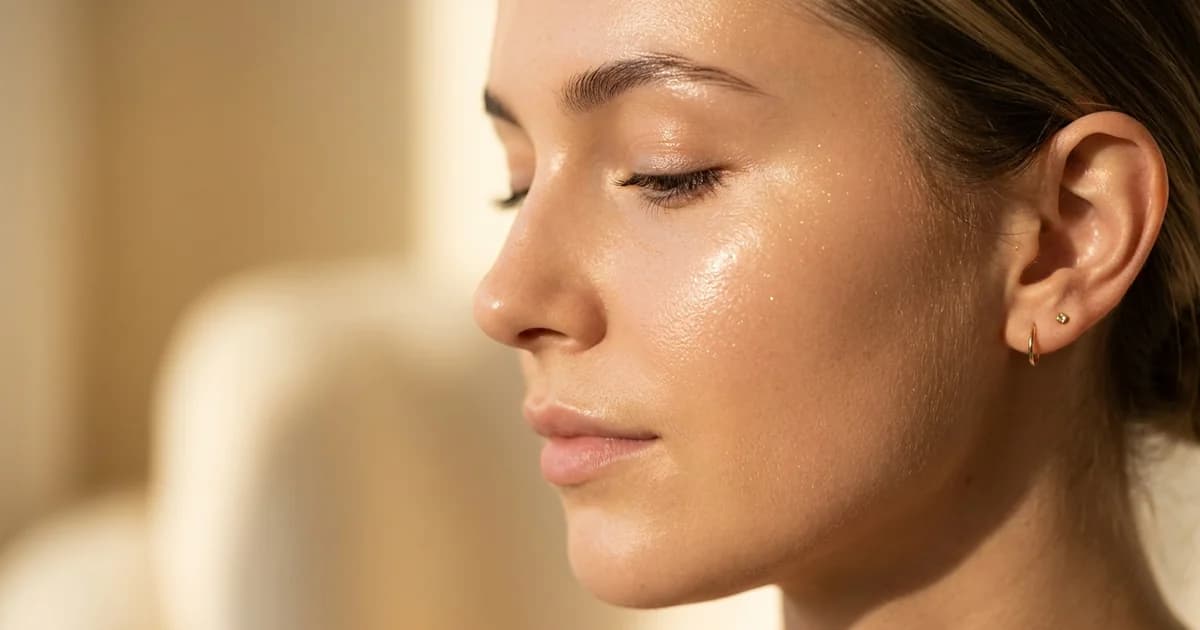
Four Glow Facials in Frankfurt compared: HydroBoost, Pollogen Therapy, Crystal Glow and Relax & Refresh – which one suits your skin and your occasion?
Newsletter
Be the first to receive updates about special offers, new treatments and beauty tips — straight to your inbox.
No third-party ads. Unsubscribe anytime.
We use cookies
We use essential cookies to operate this site. With your consent we also load Google Analytics (GA4) to understand how visitors use our site. You can withdraw consent at any time. Learn more in our Privacy Policy
Reviews
What our clients say
“Sehr freundliches und sympathisches Mädchen. Sie macht ihre Arbeit wirklich sehr gut und mit viel Sorgfalt. Man fühlt sich bei ihr wohl und gut aufgehoben. Ich bin sehr zufrieden und kann sie nur weiterempfehlen!”
— Gülay Sungurtekin
“Ich habe ein augenbrauenlifting mit Farbe gemacht und das Ergebnis ist toll geworden. Ich wurde bei jedem Schritt gefragt, ob mir die Form die Farbe etc. gefällt. Auch war Sie so herzlich und nett, man merkt, dass nicht aufgesetzt ist sondern wirklich von Innen kommt. Habe mich sehr wohl dort gefühlt.”
— Berivan Cinar
In Frankfurt · Europa-Allee 43 · Mon–Sat